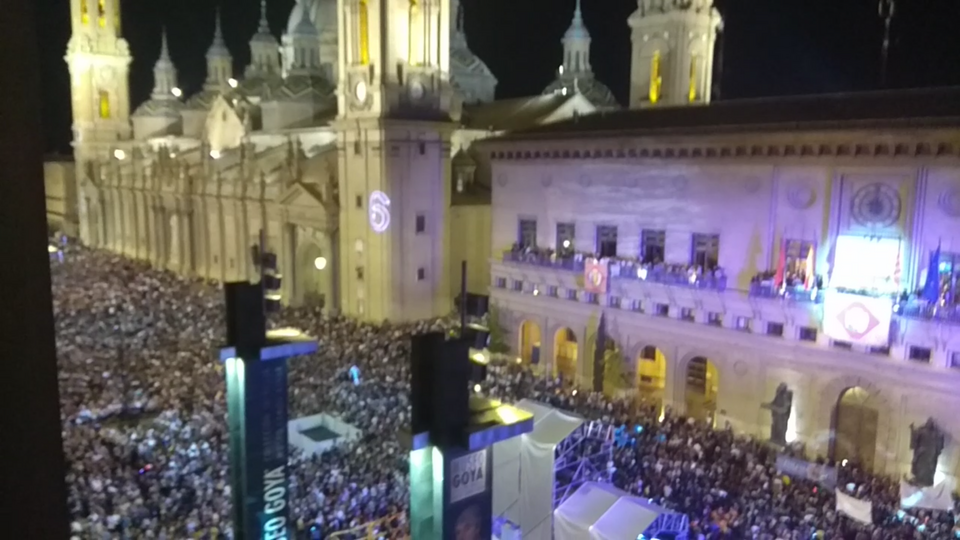
Photo: Pietrochesus · CC BY-SA 4.0 · Wikimedia Commons
Patron saint festival International Tourist Interest
Fiestas del Pilar en Zaragoza
Zaragoza · Aragón
2026 edition
10–18 October 2026
✔ Official dates confirmed
2026 programme
- 8 October, 20:00 · Houdini (Teatro Principal)
- 8 October, 21:00 · Concert by The New Raemon (acoustic) (La Lata de Bombillas)
- 8 October, 21:00 · Phantom of the Opera (Palacio de Congresos)
- 8 October, 22:00 · Concert by Hard GZ (Oasis)
- 9 October, 22:00 · Concert by Hard GZ (Oasis)
- 9 October, 22:30 · Inaugural concert by Myke Towers (Espacio Zity)
- 10 October, 18:30 · Pasacalles del Pregón "Zaragoza Campeona"
- 10 October, 20:00 · Concert by Aviador Dro (Sala López)
- 10 October, 21:00 · Reading of the Pregón by the Fire Brigade, Rescue and Civil Protection Service of the Zaragoza City Council (preceded by the performance of 'El olor de Zaragoza' by Mar Giménez and followed by fireworks) (Plaza del Pilar (balcony of the City Hall))
- 11 October, 12:00 · Subida de la Virgen del Pilar to the structure of the Ofrenda de Flores (with María Eugenia Boix, the Capilla del Pilar, the Infantes del Pilar, and Luis Antonio González) (Plaza del Pilar)
- 12 October, 06:30 · Ofrenda de Flores (initiated by the City Council of Almochuel) (Plaza del Pilar)
- 12 October, 12:00 · Misa Pontifical (Basilica del Pilar)
- 13 October, 10:30 · Ofrenda de Frutos (Departure from Plaza de Santa Engracia)
- 13 October, 19:00 · Rosario de Cristal
- 16 October, 21:00 · Concert by The Darts (USA) – 15 years of Sala Creedence (Sala Creedence)
- 16 October, 22:00 · Concert by Javi Medina (Oasis)
- 18 October, 22:30 · Closure of the festivities with fireworks and final traca (Parque Macanaz-Río Ebro)
Sources: Hoy Aragón · Zaragoza Guía · El Periódico de Aragón
Where it is and getting there
Recinto Ferial de Valdespartera · Zaragoza
View on Google Maps Directions
Sources: www.zaragoza.es
Introduction and local significance
The Fiestas del Pilar in Zaragoza are the patronal festivities dedicated to the Virgen del Pilar, the patron saint of the city and the autonomous community of Aragón. They officially take place from 10 to 18 October 2026, traditionally spanning about ten days from the weekend before 12 October until the following Sunday. These celebrations are classified as a Festival of International Tourist Interest and attract a large number of visitors, with the city’s population tripling to nearly four million participants during the peak days. The activities are primarily organised by the Zaragoza City Council, complemented by private initiatives that enrich the popular programme with exhibitions and competitions.
Historical origins and tradition
The historical journey of the Fiestas del Pilar in Zaragoza has received notable official recognitions, such as its declaration as a Festival of National Tourist Interest in 1980 and its subsequent classification as a Festival of International Tourist Interest on 27 September 2019. Among the most deeply rooted traditional events is the Ofrenda de Flores, a custom established in 1958 by the councillor Manuel Rodeles, which gathers thousands of people dressed in traditional attire to lay bouquets before the image of the Virgin in Plaza del Pilar. Another historical event is the Ofrenda de Frutos, whose first edition was held in 1949 with the participation of different regions and groups. The Rosario de Cristal has been parading since 1889, featuring a procession of twenty-nine illuminated glass floats, accompanied by lanterns and banners representing religious mysteries. Folklore and popular culture are also expressed through the Comparsa de Gigantes y Cabezudos, whose figures have very popular names among the citizens, such as Morico, Boticario, Robaculeros, Torero, Tuerto, Forano, Forana, Verrugón, Pilara, Azutero, and Cigarrera, making it an essential element of the local festive heritage during these days.
Programme and main events
The official programme of the Fiestas del Pilar in Zaragoza encompasses multiple venues and cultural proposals that combine religious tradition with contemporary concerts and performances. Among the central events are the Pasacalles del Pregón, the reading of the pregón from the balcony of the City Hall, the Subida de la Virgen del Pilar to the structure of the offering, the solemn Misa Pontifical in the Basilica, and the traditional Rosario de Cristal. Additionally, the programme includes musical events in various locations throughout the city and culminates with fireworks and the final traca at Parque Macanaz by the river Ebro. To know the exact times and locations of each event, it is advisable to consult the official programme available on municipal channels before planning your festive days.
Traditional festival food
The traditional cuisine accompanying the celebrations is notable for its use of local products and hearty recipes linked to Aragonese cooking. During these days, a wide variety of specialities can be tasted in the city’s hospitality establishments:
- Ternasco de Aragón: lamb meat from native Aragonese breeds, known for its tenderness, typically cooked in the oven with potatoes, stewed, as cachopo, in a sandwich, or made into meatballs and croquettes.
- Migas aragonesas: a traditional dish made from bread, onion with protected designation of origin from Fuentes de Ebro, extra virgin olive oil from Bajo Aragón, grapes, longaniza (a type of sausage), and eggs.
- Pollo al chilindrón: a traditional chicken stew made with a sauce of tomato, garlic, onion, pepper, white wine, and Teruel ham.
- Guardia civil: a popular montadito (small sandwich) combining rancid sardine, gherkin, pepper, and tomato.
- Jamón con chorreras: a preparation consisting of a hard-boiled egg coated in ham and cheese.
- Adoquines del Pilar: iconic large brick-shaped sweets available in flavours such as orange, strawberry, lemon, and anise, wrapped in packaging featuring the image of the Virgin and hiding the lyrics of a jota.
- Frutas de Aragón: pieces of candied or crystallised fruit covered in dark chocolate and presented in a characteristic colourful cellophane wrapping.
- Manto de la Virgen: a special dessert made specifically for the Day of the Pilar, consisting of puff pastry, cream, and egg yolk, which may include fillings of pastry cream or truffle.
Visitor guide and where to stay
The celebrations extend across various points of the urban geography, concentrating the major institutional events in Plaza del Pilar and the streets of the city centre, while the Valdespartera Fairgrounds host a significant part of the leisure and attractions offer. Given the high influx of people that the municipality experiences during these dates, logistical recommendations advise prioritising public transport or leaving vehicles parked in car parks located outside the central area. Similarly, it is useful to check updated information on possible traffic disruptions, access, and event schedules before making any travel arrangements.
Spotted a mistake or something missing? Suggest a correction · How we work