Photo: El Pantera · CC BY-SA 3.0 · Wikimedia Commons
Fair International Tourist Interest
Feria del Caballo en Jerez de la Frontera
Jerez de la Frontera, Cádiz · Andalucía
2027 edition
24 April – 1 May 2027
✔ Official dates confirmed
2027 programme
- 13:00 - 20:00 · Horse parade (Parque González Hontoria)
- Harnessing and coach driving competitions
- Flamenco shows
- Fireworks
- Children's Day
Sources: La Guía Go!
Where it is and getting there
Parque González Hontoria · Jerez de la Frontera, Cádiz · Jerez de la Frontera
View on Google Maps Directions
Sources: es.wikipedia.org
Introduction and local significance
The Feria del Caballo in Jerez de la Frontera is one of the major festive events in Andalusia and has been declared a Festival of International Tourist Interest. For this edition, the official celebration dates are from 24 April to 1 May 2027. This festival is notable for bringing together equestrian tradition and flamenco culture in a specific venue prepared to welcome visitors from diverse backgrounds.
Historical origins and tradition
The origins of the Jerez fair date back to the time of the Castilian conquest, establishing a livestock fair in the second half of the 13th century, specifically in 1264 or 1284 according to sources, by concession of Alfonso X. In 1481, a document specified the location of the fair from the Puerta del Real to Calle Francos, including the Plaza de la Yerba, after having previously been located in the Santiago area. In the 19th century, specifically in 1856, variations towards an exhibition model occurred, leading to the creation of a Special Fair Commission in 1867. In 1961, the fair was moved to Parque González Hontoria.
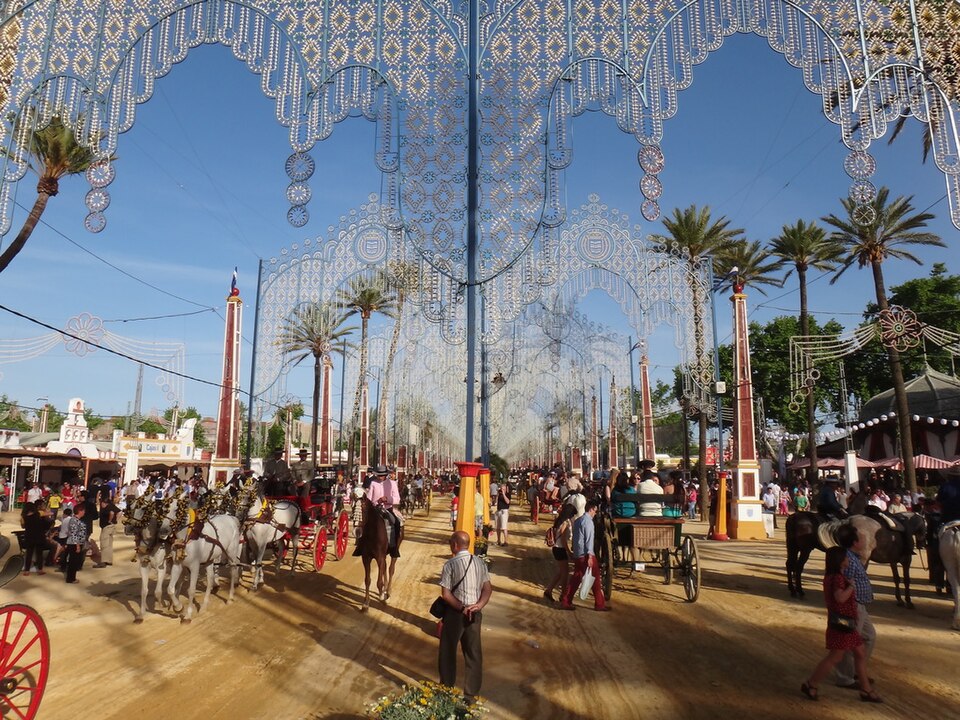
Among the most deeply rooted customs are the daily morning and afternoon parades of horsemen, horsewomen, and decorated carriages throughout the fairgrounds. Attendees participate by wearing traditional attire, such as the traje de corto for men riding horses and the traje de flamenca or gitana for women during the day, and semi-formal attire at night. Additionally, equestrian exhibitions and competitions are held, including dressage, jumping, harnessing, coach driving, and morphological contests, with the prestigious Caballo de Oro award. There are also competitions for the decoration of casetas and for tapas.
Programme and main events
The official programme of the Feria del Caballo in Jerez de la Frontera includes the inaugural lighting ceremony at Parque González Hontoria, as well as the characteristic parades of horses and carriages. Visitors can enjoy harnessing and coach driving competitions, flamenco shows, and specific activities such as Children's Day with discounts on attractions. The festive days officially conclude with a fireworks display. It is recommended to check the schedules and specific details in the official programme provided by the municipal council.
Traditional festival food
The culinary offerings at the fair include drinks and traditional dishes consumed in the casetas of the venue. Among the drinks, the rebujito stands out, which consists of mixing fino or manzanilla wine with lemon soda. As an accompaniment, it is very common to order portions of pescaíto frito (fried fish) and delicate, crispy tortitas made with shrimp. Additionally, the local gastronomy is complemented by various traditional stews from the area and the festival itself. These include tagarninas esparragás (a type of wild asparagus dish), menudo (tripe stew), and berza jerezana (a hearty stew), which are deeply rooted in the popular cuisine of Jerez de la Frontera.
Visitor guide and where to stay
The fair takes place at Parque González Hontoria, and the Jerez City Council has made 2,500 free parking spaces available in municipal lots with 24-hour surveillance near the fairgrounds. The locations of the free parking are on Avenida Chema Rodríguez in front of the Chapín Sports Complex, Avenida de las Olimpiadas, Calle San Marino with Calle Ana Mª Sabido, Calle Rafael Ruiz-Mateos, and Avenida Lola Flores with Calle Ana Mª Sabido. There are also monitored parking facilities on Avenida de la Feria and in the Polígono San Benito.
To access by public transport, urban buses on lines 5 and 16 connect the city centre with Parque González Hontoria, with special services during the fair. It is important to note that during the fair days, many central streets are closed to traffic to allow for horse parades. Unlike other Andalusian fairs, the casetas at the Feria de Jerez are open to the public. It is advisable to carry cash as some stalls and small casetas do not accept cards. For overnight stays and logistics, it is wise to book accommodation in advance for the festival dates, preferably using public transport or parking outside the centre on the busiest days.
Spotted a mistake or something missing? Suggest a correction · How we work