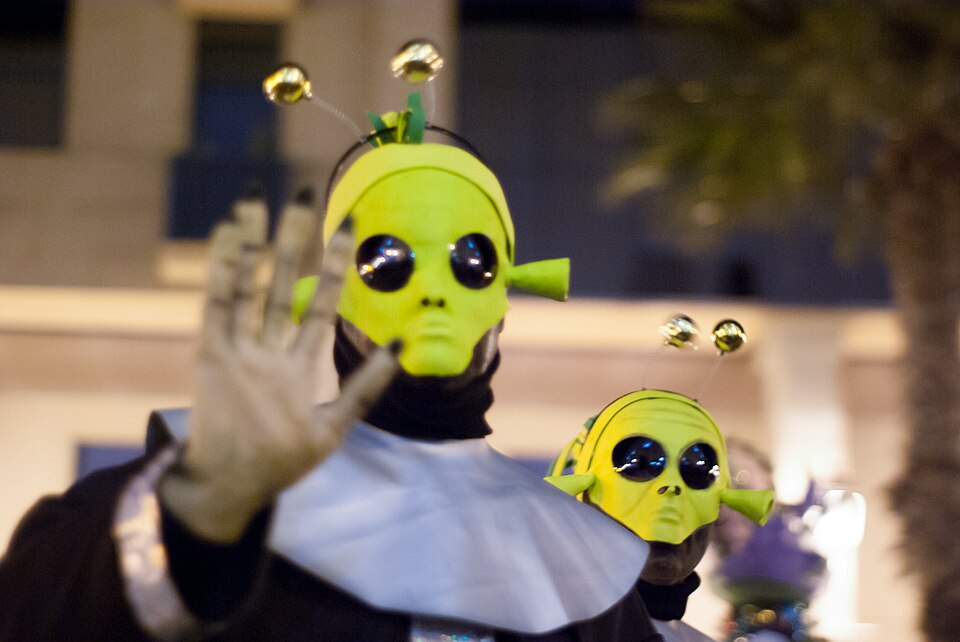
Photo: JalilArfaoui · CC BY 2.0 · Wikimedia Commons
Carnaval de Ceuta
Ceuta · Ceuta
2027 edition
23 January – 14 February 2027
✔ Official dates confirmed
2027 programme
- 31 January · Mejilloná, with free mussel tasting and performances by carnival groups.
- 6 February · Concurso de Agrupaciones Carnavalescas and presentation of Caballas de Oro in the Cuarteto, Chirigota and Comparsa categories. (Teatro Auditorio del Revellín)
- 7 February · Dominguito, with performances by comparsas in their different categories.
- 13 February, afternoon · Gran Cabalgata del Carnaval.
- Entierro de la caballa, bringing the events to a close.
Sources: ceuta.es · ceuta.es · El Pueblo de Ceuta
Where it is and getting there
Teatro Auditorio del Revellín · Ceuta
Sources: ceutainforma.com
Introduction and local significance
The Carnaval de Ceuta takes place from 23 January to 14 February 2027. The festival brings together carnival groups, costumes and street events, with the Reina del Carnaval and Dios Momo as its distinctive figures.
A visit offers the chance to discover a tradition documented since the 19th century and a form of carnival that returned with democracy. The songs of the murgas, the old masked balls and homemade instruments help tell its local history.
The Caballa lends its name both to the awards in the groups’ competition and to the event that brings the festival to a close. Alongside the performances, food also has a place in the celebrations, with tastings linked to various carnival events.
Historical origins and tradition
The documented history of carnival in Ceuta dates back at least to 1892, when its first rules were published. At the time, societies such as Círculo de Ceuta and Casino Africano organised balls.
The murgas’ songs dealt with matters relating to the city. At the 1928 carnival, for example, their lyrics were devoted to the visit that Alfonso XIII and Victoria Eugenia had made to Ceuta in 1927.
In the old street carnival, masked participants tried to conceal their identities from their neighbours. To keep the game going, they repeated the expression «¡Adiós que no me conoces!» – ‘Goodbye, you don’t know who I am!’ – a phrase associated with the custom of going out unrecognised.
The old carriage promenade at Rebellín was the scene of battles with confetti and streamers. Decorated horse-drawn carriages also passed along it, in a celebration combining the promenade with costumes and street participation.
The murgas used tunes from popular songs and instruments made from everyday objects. These included an Anís del Mono bottle played with a fork, a reed pipe and a homemade bass drum.
Carnival returned with democracy, although it took on different forms from those of the past. In 2023, the city celebrated 40 years of these festivities.
The Concurso de Agrupaciones Carnavalescas, known as COAC, brings together chirigotas, comparsas, choirs and quartets. Its traditional structure comprises two semi-finals and a final, with points accumulated across the rounds.
Programme and main events
The Carnaval de Ceuta combines competition performances with events at which the groups take part again, as well as the Gran Cabalgata and the farewell to the Caballa. The Mejilloná combines a tasting with carnival performances, while the Dominguito brings the groups together after the final.
The competition takes place at the Teatro Auditorio del Revellín and includes the presentation of Caballas de Oro in the Cuarteto, Chirigota and Comparsa categories. For the events planned for this edition, check the programme in the listing.
Traditional festival food
Food associated with carnival features both in today’s celebrations and in memories of the old balls. The guide records these three dishes and the occasions on which they are eaten:
- Mejillones: mussels offered free of charge during the Mejilloná, an event combining a tasting with performances by carnival groups.
- Paella: a rice dish served at the farewell to the Caballa, marking the close of the festival.
- Perdices guisadas: stewed partridges prepared to a typically Ceuta recipe and formerly enjoyed before the masked balls.
The partridges recall a custom that predates the current form of carnival. The mussels and paella, meanwhile, are associated with specific events in the celebration.
Visitor guide and where to stay
The Teatro Auditorio del Revellín is one of the carnival venues and hosts the groups’ competition.
For the parade, Protección Civil recommends arriving early and keeping children in sight. It also advises agreeing on a meeting place in case anyone becomes separated from the group and not crossing the security cordon.
In an emergency, call 112. If you prefer to follow some events remotely, Radio Televisión Ceuta broadcasts the semi-finals, the final and the Gran Cabalgata via digital terrestrial television, Ceuta Play and its social media channels.

Spotted a mistake or something missing? Suggest a correction · How we work